Best Electronic Signature Apps (Tested & Compared for 2026)
Explore top electronic signature apps to easily sign documents and forms. Find the best tools for speed, security, and simple digital workflows.


Finding the best electronic signature apps for mobile phones and tablets can be quite a challenge. First and foremost, you need to consider the safety of your documents. You cannot compromise the security of your data just because you want to save a few cents. Moreover, you must check whether the app can handle document signing in all sorts of workflows.
The good news is you do not need to look elsewhere to find these apps. Below are our top picks for the best electronic signature apps for signing documents and filling out forms.
Comparison Table: Best eSignature Software (Tested)
Fill: Best Overall Electronic Signature App for Speed & Workflow Control
My experience using Fill:
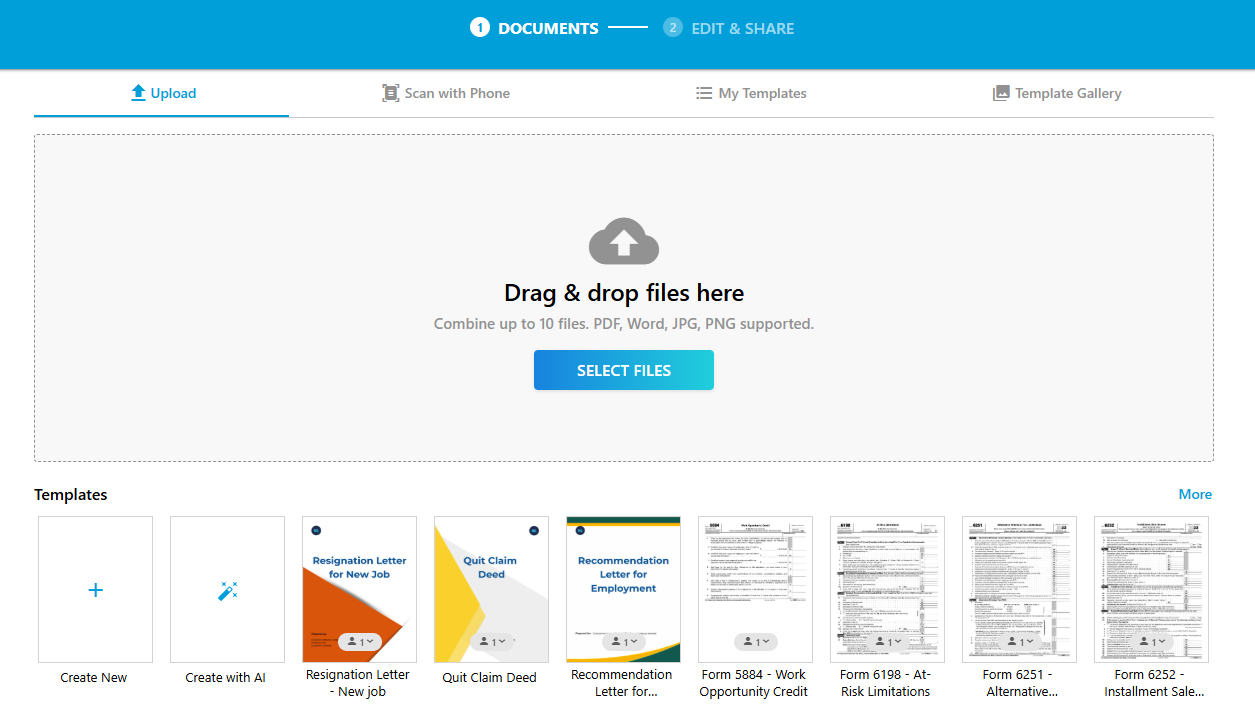
Signing up took less than a minute since I could use my Google account. Unlike some tools, I didn’t get stuck in a long onboarding flow—I landed directly on a clean dashboard with a clear “Start” button.
From there, everything felt fast and intentional.
What stood out immediately was how easy it was to:
- Upload a document
- Assign recipients with color-coded roles
- Drag and configure fields without confusion
One feature I didn’t expect—but ended up relying on—was the ability to pre-fill fields before sending. This meant my recipients didn’t have to re-enter information I already had, which made the entire process smoother.
I also liked that I could:
- Sign my own document before sending
- Review all fields in one pass before sending
- Test the document as a recipient
That last part is something most tools don’t offer—and it makes a big difference when you’re sending important contracts.
What stood out:
- Fastest “time to send” of all tools I tested
- Clean, modern interface with minimal learning curve
- Strong workflow features without feeling overwhelming
- Built-in document organization (folders + tags right after sending
Where it could improve:
- The automatic timestamp under signatures can sometimes disrupt document formatting
- The AI assistant requires login—even for recipients—which adds friction
Best for:
Teams and professionals who want a fast, structured, and scalable signing workflow without the complexity of enterprise tools.
SignEasy: Best Simple eSignature Tool with Built-In Approval Flow
My experience using SignEasy:
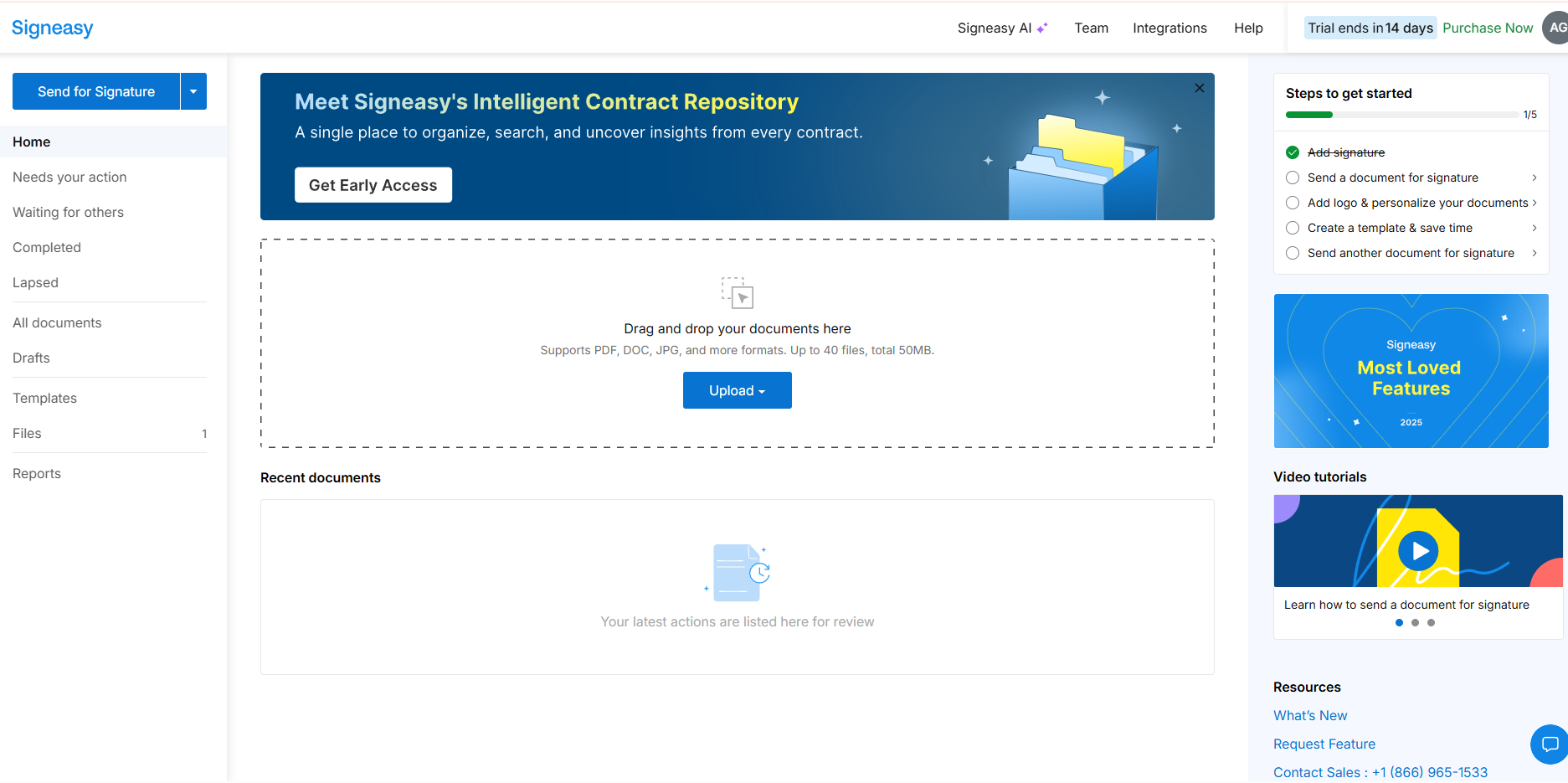
Signing up with SignEasy was straightforward since I could log in using my Google account. I was immediately given access to a free plan using a personal email, while the business trial required a work email.
Unlike more complex tools, the onboarding was light but still structured. It asked basic questions about role, company size, and usage intent, which helped configure the workspace without slowing me down.
Once inside, I didn’t land directly on a document editor—instead, I had to navigate to the upload section manually. But after that, the experience became very smooth.
Uploading and preparing a document felt intuitive, especially when assigning signature fields. Everything was drag-and-drop and responsive.
What really stood out was something I hadn’t seen in most other tools: the approver and observer roles. This allowed internal stakeholders to review a document before it was sent out for signature, which is especially useful in structured organizations.
What stood out:
- Approver workflow for internal review before sending
- Observer role for visibility without signing responsibility
- Easy drag-and-drop field assignment
- Built-in document categorization for organization
SignEasy felt particularly strong in environments where documents need light internal governance before external signing. It’s not just a signing tool—it quietly adds a layer of review control that most lightweight tools skip.
Where it could improve:
- No strong template library
- Document organization is basic compared to more structured platforms
- Email delivery sometimes lands in “non-important” inbox sections
- Limited advanced workflow automation
Best for:
Small teams or professionals who need a simple signing tool with light approval workflows but don’t require advanced document automation or compliance-heavy infrastructure.
DocuSign: Best for Enterprise-Grade eSignature Workflows & Compliance
My experience using DocuSign:
Using DocuSign felt very different from the lighter tools I tested. From the start, it was clear this is an enterprise-first platform.
The onboarding process was longer than expected. Instead of immediately accessing a signing dashboard, I had to go through account setup, verification, and navigation inside an admin-style console before even finding the eSignature section.
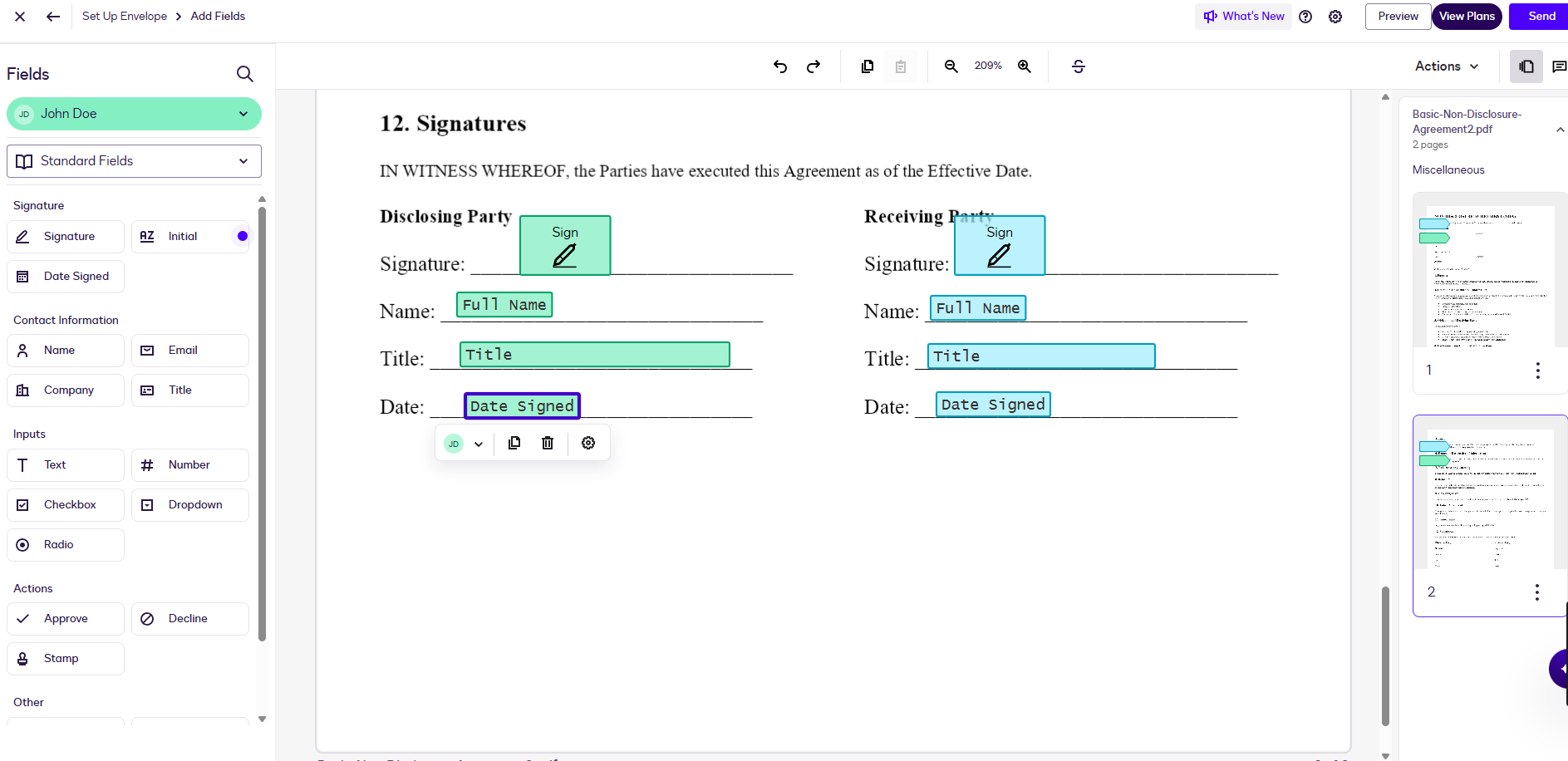
Once inside the correct area, uploading a document was smooth. The platform is clearly built for structured workflows, and it shows in how many options are available at every step.
One of the most impressive features was the AI-assisted field detection, which automatically identified where signature and form fields should go. This reduced the need for manual drag-and-drop setup significantly.
Sending the document was also straightforward, and the system actively prevented mistakes by prompting corrections before final submission.
On the recipient side, signing was clean and secure, but slightly rigid compared to simpler tools. For example, I had to manually confirm agreement before the signature was applied, and there was no pre-generated signature style available.
What stood out:
- AI-powered field detection during document setup
- Strong compliance and validation prompts before sending
- Secure, structured signing flow for recipients
- Reliable audit-style workflow tracking
DocuSign clearly excels in regulated, high-trust environments where compliance and process control matter more than speed. Everything feels designed to reduce legal risk and enforce structure.
Where it could improve:
- Onboarding is unnecessarily complex for new users
- Dashboard navigation feels fragmented at first
- Overkill for simple document signing use cases
- Slower setup compared to lightweight alternatives
Best for:
Large organizations or teams that need strict compliance, structured workflows, and legally robust signing processes, especially in legal, finance, or enterprise environments.
PandaDoc: Best for Sales Documents, Proposals & Contract Automation
My experience using PandaDoc:
Using PandaDoc felt less like a pure eSignature tool and more like a full document creation platform built for sales teams.
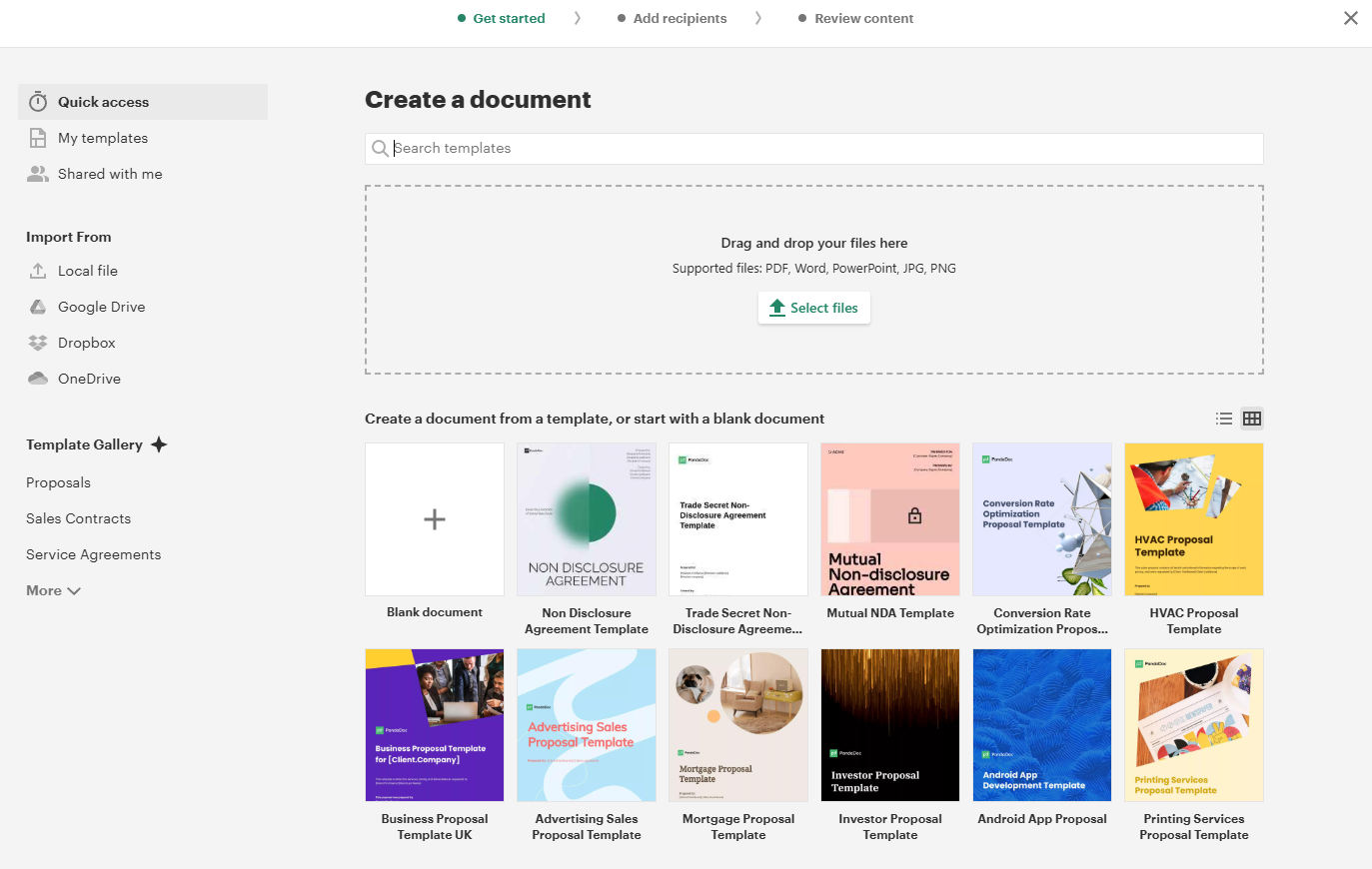
From the start, the focus was clearly on creating documents, not just signing them. The onboarding guided me toward templates and structured document building rather than simple uploads.
Uploading a document was easy, but what stood out was how much control I had over turning it into a structured, interactive proposal. Instead of just placing signature fields, I could add variables, pricing blocks, and reusable elements.
The sending process felt smooth, and tracking document status in real time was particularly useful. I could see when a document was opened, viewed, and signed without needing follow-ups.
However, I noticed some friction when dealing with formatting. Uploaded documents didn’t always behave consistently when converted into editable templates, which sometimes required manual adjustments.
What stood out:
- Strong template and proposal-building system
- Ability to add dynamic fields and variables
- Real-time tracking of document engagement
- Designed for sales workflows, not just signatures
PandaDoc is clearly optimized for sales teams and deal workflows. It shines when documents are part of a larger conversion process rather than just signature collection.
Where it could improve:
- Formatting inconsistencies when importing documents
- Can feel too sales-oriented for general document signing
- Some features locked behind higher pricing tiers
- Slight learning curve for non-sales users
Best for:
Sales teams, agencies, and businesses that need proposals, quotes, and contract automation in one workflow, not just eSignatures.
Dropbox Sign: Best for Simple, Clean, Low-Friction Document Signing

My experience using Dropbox Sign:
Using Dropbox Sign felt intentionally simple and minimal compared to more feature-heavy tools.
The onboarding was quick, and I was able to access the signing dashboard without much setup friction. The interface is clean and doesn’t overwhelm you with options, which makes it easy to get started immediately.
Uploading a document and assigning signature fields was straightforward. I especially liked how precise the field placement felt compared to some other tools—everything snapped cleanly into place.
Creating templates was also easy, and I could reuse documents without rebuilding them from scratch, which is helpful for repetitive workflows.
However, the simplicity also comes with limitations. There’s a noticeable lack of advanced workflow features, and the tool feels more suited for straightforward signing rather than complex document processes.
What stood out:
- Very clean and distraction-free interface
- Easy drag-and-drop field placement
- Simple template creation and reuse
- Fast onboarding and setup
Dropbox Sign is best when you want a no-friction signing experience. It doesn’t try to be an all-in-one platform—it just focuses on getting documents signed quickly.
Where it could improve:
- Limited workflow automation
- Not ideal for complex or multi-step approvals
- Basic feature set compared to competitors
- Less suitable for scaling teams
Best for:
Individuals and small teams that need a simple, reliable eSignature tool without complexity or setup overhead.
Signaturely: Best for Lightweight, No-Frills E-Signatures for Small Teams

My experience using Signaturely:
Using Signaturely felt like stepping into one of the simplest eSignature tools in this entire test.
The onboarding process was minimal and straightforward. Instead of a guided setup or feature tour, I was quickly placed into the core workflow where I could upload a document and start preparing it for signatures almost immediately.
The interface is intentionally simple. There are very few distractions, which makes it easy to understand what to do next—even if you’ve never used an eSignature tool before.
Uploading a document was fast, and assigning signature fields was straightforward. The system keeps things very “lightweight,” focusing only on essential signing functionality rather than advanced workflow design.
One thing that stood out is how clearly the tool is built around basic document sending and signature collection, rather than workflow customization or automation. It doesn’t try to be a full document management system—it just focuses on getting documents signed.
That simplicity is also reflected in how limited the feature set feels compared to more structured platforms.
What stood out:
- Extremely simple onboarding and setup flow
- Clean, minimal interface with no learning curve
- Basic but effective document upload and signing process
- Works well for occasional document sending
Signaturely is strongest when you need a quick, no-friction way to send documents for signature without dealing with complex workflows, templates, or configuration layers.
It feels intentionally lightweight, which makes it easy to adopt instantly.
Where it could improve:
- Limited automation or workflow control
- Very basic feature set compared to competitors
- Not ideal for teams needing document organization or scaling workflows
- Lacks deeper customization options for advanced use cases
Best for:
Freelancers, solo operators, or small teams that only need occasional eSignatures and prefer simplicity over functionality depth.
SignNow: Best Budget-Friendly Tool with Strong Feature Depth
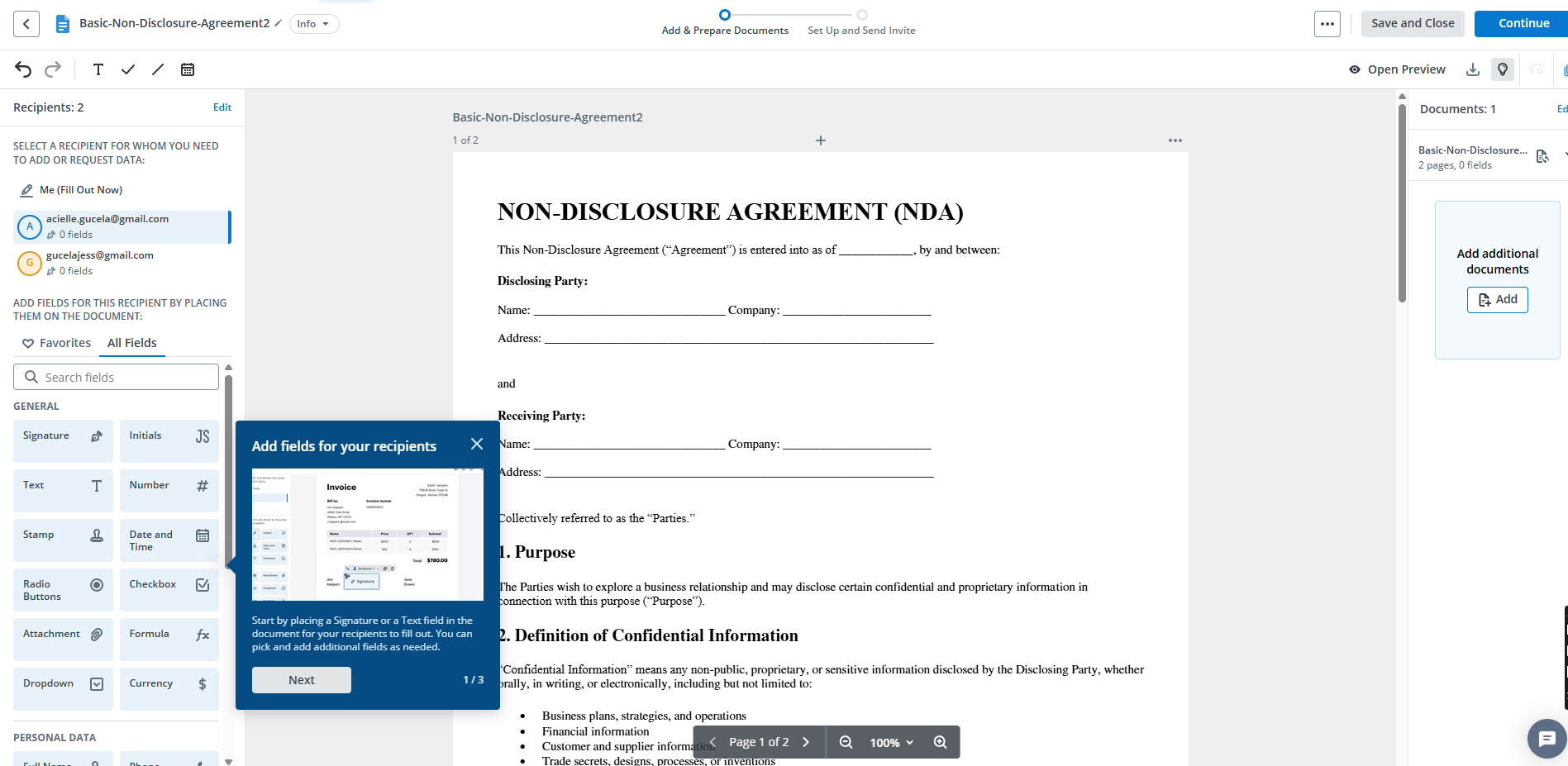
My experience using SignNow:
Using SignNow started off impressively fast. I was able to sign up for a free trial and upload a document almost immediately, without the long onboarding flows I saw in tools like DocuSign or Adobe Sign.
What stood out early was how quickly the platform generated a signature for me after entering my name. It felt streamlined and efficient, almost assuming I already knew what I was doing.
The document editor itself is quite powerful. I could drag and drop fields easily, and there were helpful tooltips introducing features like bulk sending and SMS reminders. These felt like genuinely useful additions rather than overwhelming extras.
However, the experience took a turn when I reached the final step of sending the document. A paywall appeared requesting credit card details, which felt slightly disruptive given how far I had already progressed in the workflow.
Even though I was able to close it and continue, the timing created some friction and confusion.
On the recipient side, I also noticed that emails sometimes landed in less prominent inbox tabs, which made tracking slightly less seamless than other tools.
What stood out:
- Extremely fast setup and document upload
- Strong drag-and-drop field editor
- Useful advanced features (SMS reminders, bulk sending)
- Good balance of simplicity and functionality
SignNow performs well as a budget-friendly alternative with surprisingly deep feature sets, especially for teams that need automation without enterprise pricing.
Where it could improve:
- Paywall appears late in the workflow, creating friction
- Email visibility can be inconsistent
- Some features feel slightly hidden or layered
- UI consistency could be improved
Best for:
Small to mid-sized teams that want advanced eSignature features at a lower price point, and can tolerate minor UX inconsistencies.
Adobe Acrobat Sign: Best for PDF-Heavy Enterprise Document Workflows
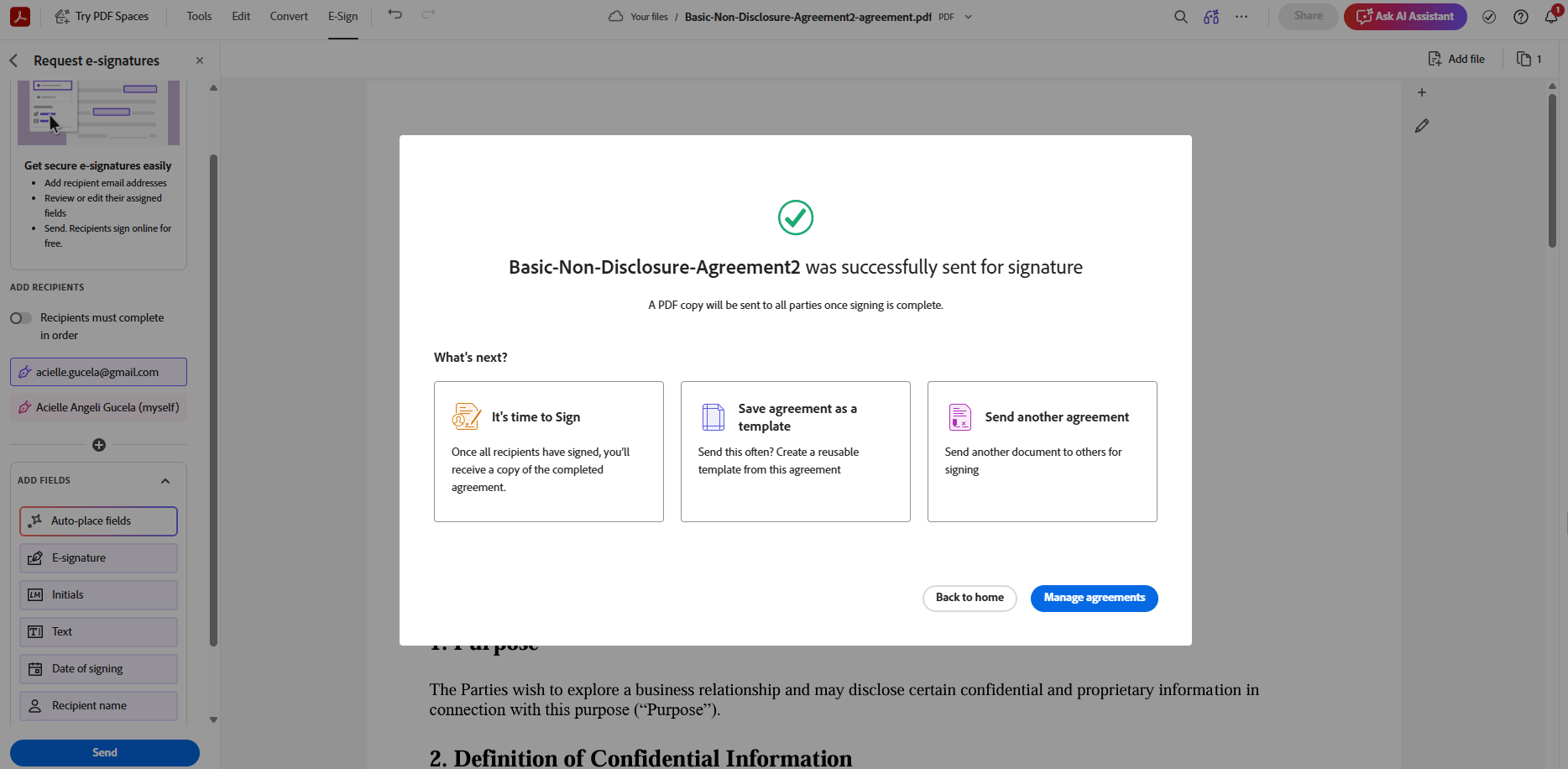
My experience using Adobe Acrobat Sign:
Using Adobe Acrobat Sign felt like stepping into a much larger ecosystem rather than a standalone eSignature tool.
Right after signing up, I was placed into an Adobe admin console instead of a dedicated signing dashboard, which made it slightly difficult to immediately find where to start.
Once I located the correct section, uploading a document and preparing it for signing was smooth. What immediately stood out was the AI-assisted field detection, which automatically identified fillable fields without manual setup.
This significantly reduced setup time compared to tools where everything must be manually dragged into place.
Sending the document was also well-controlled. The system actively flagged errors and prevented submission until everything was correctly configured.
Signing was secure and structured, but more rigid than lightweight tools. There was no pre-generated signature option, and I had to manually create or type my signature before confirming agreement.
What stood out:
- AI-powered automatic field detection
- Strong PDF editing and document management capabilities
- High level of security validation before sending
- Deep integration with broader Adobe ecosystem
Adobe Sign is clearly designed for teams already embedded in the Adobe ecosystem, especially those dealing heavily with PDFs and structured document workflows.
Where it could improve:
- Onboarding is confusing and not intuitive
- Interface feels fragmented across multiple dashboards
- Overpowered for basic signing needs
- Requires more steps than simpler competitors
Best for:
Enterprises and teams already using Adobe products that need a full PDF + document + eSignature ecosystem in one platform.
How to Choose the Right eSignature Tool
In choosing the best app for online document signing, you must first consider whether it's safe enough to use for documents containing valuable information. The app should provide multiple layers of security to secure your documents from malicious users. Furthermore, it should be easy enough for you to use. You should be able to use the app anytime you need it and sign documents on the go. There should also be an option to request signatures from multiple signatories.

Instead of asking “Which is best?”, ask:
1. How complex are your workflows?
- Simple → Signaturely, SignEasy
- Structured → Fill
- Advanced → DocuSign, Adobe Sign
2. Do you need compliance (HIPAA)?
- Yes → Fill, DocuSign, Adobe Sign
- No → Most tools will work
3. How often do you send documents?
- Occasionally → Dropbox Sign, SignEasy
- Frequently → Fill, PandaDoc, SignNow
4. Do you need templates and automation?
- Yes → PandaDoc, SignNow, Fill
- No → Signaturely
Which eSignature Tools Are HIPAA Compliant?
If you’re handling patient data or sensitive information, HIPAA compliance isn’t optional.
Strong HIPAA-ready options:
- Fill → Best balance of usability + structured workflows
- DocuSign → Enterprise-grade compliance (higher tiers)
- Adobe Acrobat Sign → Robust but complex
Conditional / limited:
- SignNow → Only with site license
- Dropbox Sign → Works for simple consent, not full compliance workflows
Not positioned for HIPAA:
- Signaturely
- PandaDoc
- SignEasy
HIPAA isn’t just about encryption—it’s about controlled workflows, audit trails, and document management.
Read Further: Detailed reviews of the Best HIPAA-Compliant Electronic Signature Software
Benefits of Using an Electronic Signature
Modern society is now moving past the era of ink and paper. Nowadays, people work using their computers. Businesses also transact deals online, replacing in-person meetings with video calls. Thus, it is only befitting for people to switch to online document signing instead of sticking with the customary wet signatures.
Using an electronic signature to sign documents certainly has some perks. Here are some of the many benefits of using an electronic signature:
- You get to carry less stuff. There's no need to go frantic each time you forget to bring a pen. As long as you have your phone, you're all set to sign any document.
- More privacy. You can control whoever has access to your signed documents. It's also easier to restrict unauthorized people from snooping into your files.
- Enhanced security. Compared to ink-based signatures, electronic signatures are safer because they are encrypted. It is also quite impossible to alter or modify an electronic signature without you knowing.
- Sign documents in bulk (high volume signing). You can sign hundreds or thousands of documents without straining your hands and wrists.
- Legally Binding. Any document signed using an electronic signature is legally binding.
How Do I Create an Electronic Signature?
One way to create an electronic signature is to draw it. Drawing an electronic signature usually requires a mouse or digital pen. Another way is to type your signature and convert it into a visually appealing text. You can also choose to scan and upload your handwritten signature from your local folder or media gallery.

Final Verdict: Which eSignature Tool Is Best?
The best electronic signature apps are those that can provide you with the features and functionality that you need to get your documents signed in a jiff.
There’s no one-size-fits-all—but based on real usage:
- Best overall balance: → Fill
- Best for enterprises: → DocuSign
- Best for sales teams: → PandaDoc
- Best budget option: → SignNow
- Best for simplicity: → Signaturely
Most eSignature tools fall into two extremes:
- Too simple → lacks structure
- Too complex → slows you down
Fill sits right in the middle. It gives you control without complexity, which is exactly what most businesses—and especially healthcare teams—actually need.
Fill strikes a rare balance between simplicity and structure. While many eSignature tools either overwhelm you with enterprise features or limit you to basic signing, Fill gives you full control over how documents are prepared, organized, and sent—making it especially well-suited for teams that need both efficiency and compliance.
If you are looking for an all-around electronic signature app that you can use for your personal or business needs, you should give Fill a try. With Fill, you can start with a free account or upgrade to a Pro account. Select a plan today and see how eSign works.